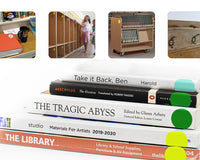
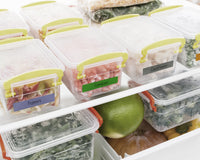
Blank dissolvable food labels can be used for meal names, dates, leftovers, lunch containers, pantry jars, short reminders, and almost any temporary food note you need.
That flexibility is what makes them so helpful.
Some containers need a date. Others need a name, a meal, or a quick note that says, “Use this first.” With a blank label, you are not limited to one printed message. You can write what makes sense today, then wash the label away when the container is ready to be reused.
Simple, useful, and one less thing to scrape off later.
Why Choose a Blank Food Label?
Preprinted labels are helpful when you need the same information every time. A “Use By” label has one clear job. A contents-and-date label gives you two specific fields.
But family kitchens are not always that predictable.
One container may need a food name and date. Another may need a child’s name. A third may need a reminder for whoever gets home first.
A blank dissolvable label can become whatever the moment calls for.
You can write:
- A food or meal name
- The date it was prepared
- The date a jar was opened
- A family member’s name
- A short storage note
- “Use First”
- “Dinner Tonight”
- “Do Not Eat Yet”
- Initials or a quick kitchen code
It is a small blank space with a surprising number of jobs.
What Can You Write on a Blank Dissolvable Label?
One blank label can handle all kinds of temporary food notes.
Meal Prep
Chicken and Rice
Monday Lunch
Dinner Tonight
Leftovers
Taco Meat – 7/14
Sunday Dinner
Use First
Lunches and Snacks
Ava’s Snack
Dad’s Lunch
Take to Practice
Pantry Storage
Brown Rice
Pancake Mix
Opened Friday
Shared Kitchens
Church Leftovers
Office Fridge
For the Potluck
Food Prep
Ingredient Name
Date and Initials
Short Batch Note
Write what you need today.
Wash the label away when the container is ready for something new.
Make Leftovers Easier to Use

Leftovers tend to enter the refrigerator with good intentions. Then they get stacked behind the milk, moved to another shelf, and slowly become a family guessing game.
A quick handwritten label makes them easier to recognize.
A label helps identify the food, but it should also be paired with safe storage habits. The USDA’s leftovers and food safety recommendations explain how to cool, refrigerate, freeze, thaw, and reheat leftovers safely.
Try notes such as:
- Taco Meat – Monday
- Chicken Soup – 7/14
- Sunday Dinner
- Use First
- Lunch for Tomorrow
The note does not need to be fancy. It only needs to make sense when someone opens the refrigerator hungry and in a hurry.
It also gives the household food detective a well-earned day off.
Add Helpful Notes to Meal Prep Containers
Meal prep is easier when each container has a clear purpose.
You might prepare several lunches at once, portion snacks for the week, or make ingredients ahead of dinner. Blank labels let you identify each container in the way that works best for your routine.
For example:
- Monday Lunch
- Chicken and Rice
- Breakfast Oats
- After-School Snack
- Cut Vegetables
- Dinner for Tuesday
You can include a date when it is helpful, but you do not have to use the same format on every container. That is the advantage of starting with a blank label.
Organize Lunches for Kids and Adults

Reusable lunch containers have a habit of traveling.
They go to school, work, sports practice, church events, field trips, and sometimes disappear into the back seat of the car for longer than anyone would like to discuss.
A blank write-on label can help identify:
- A child’s lunch or snack
- A parent’s work lunch
- Food packed for a field trip
- Containers brought to a school event
- Meals prepared for a babysitter or grandparent
- Shared food in an office refrigerator
Write a name, meal, room number, day of the week, or whatever will help the container find the right person.
Use Them on Pantry Jars and Refillable Containers

Blank dissolvable labels are also helpful for jars and containers that change contents often.
A jar might hold granola this month and rice the next. A snack bin may be filled with crackers one week and dried fruit the next. Permanent labels do not always make sense when the contents keep changing.
Use blank labels on:
- Pantry jars
- Dry-goods containers
- Spice jars
- Baking ingredients
- Coffee and tea containers
- Snack bins
- Homemade mixes
- Mason jars used for storage
When the container is empty, wash away the old label and give the jar a new job.
Leave Quick Notes for the Family
Sometimes a food label is really a tiny message board.
You can write:
- Dad’s Lunch
- Ava’s Snack
- Save for Dinner
- Use This First
- For Grandma
- Opened Friday
- Take to Practice
- Do Not Open Until Saturday
A short note can answer a question before someone has to text you from three feet away from the refrigerator.
Helpful for Schools, Churches, and Shared Kitchens
Blank labels are useful anywhere food and reusable containers are shared.
That may include:
- Classroom snack bins
- Teacher lounge containers
- School events
- Church kitchen leftovers
- Potlucks
- Meal trains
- Community events
- Office refrigerators
- Shared kitchens
Write the owner’s name, the event, the date, or a simple instruction. When the container comes home and gets washed, the temporary note can wash away too.
Flexible Labels for Food Prep Teams
Restaurants, caterers, food trucks, delis, and shared kitchens sometimes need a quick label without several preprinted fields.
A blank label can be used for:
- Ingredient names
- Short prep notes
- Dates
- Initials
- Batch notes
- Temporary reminders
- Container identification
Blank labels are not a replacement for required food-safety procedures or a complete food-rotation system. They are simply a flexible option when a short handwritten note is all the container needs.
Why Use Dissolvable Labels on Reusable Containers?
A regular paper label may be easy to apply and much less pleasant to remove.
It can peel into pieces, leave paper behind, or cling to the container through several washes like it has no plans to move out.
Dissolvable labels are made for temporary labeling. Apply one to a clean, dry surface, write your note, and use the container as needed. When it is time to wash the container, water breaks down the label so it can wash away during cleanup.
The label helps while you need it, then gets out of the way.
Simple Tips for Using Blank Labels
- Apply labels to a clean, dry surface.
- Use short words that are easy to read.
- Add a date when it will be helpful later.
- Keep a marker close to the label roll.
- Place the label where it can be seen easily.
- Label containers before placing them into storage.
- Wash away the old label before reusing the container.
Not sure how long a certain food should stay in the refrigerator or freezer? The FoodKeeper food storage resource provides storage guidance for hundreds of foods and beverages.
Do not make the system more complicated than it needs to be. The best labeling habit is the one your family or team will actually continue using.
One Blank Label, Plenty of Possibilities
Blank dissolvable food labels are useful because they do not decide the message for you.
They can identify leftovers, organize lunches, mark pantry jars, leave a note for the family, or help keep shared containers clear. When the job is finished, the label washes away and the container is ready for whatever comes next.
Write what you need. Use the container. Wash the label away.
ChromaLabel 1" x 2" Blank Dissolvable Food Labels include 500 writable labels per roll. They provide open space for food names, dates, initials, reminders, and temporary notes on reusable food containers, jars, lids, and other clean, dry surfaces.