Are dissolvable labels eco-friendly?
They can be, especially when they help reduce sticky residue, support reusable containers, and wash away cleanly during normal washing. The full answer depends on the label material, adhesive, ink, and whether claims like biodegradable or compostable are verified.
For restaurant kitchens, the biggest benefit is practical: dissolvable labels help food containers get labeled, used, washed, and reused without old adhesive building up over time.
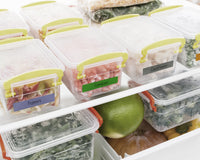
That matters because restaurants use labels every day. Prep containers, sauce bottles, ingredient bins, deli containers, bakery items, and leftovers all need clear labels. Regular labels and tape can leave sticky residue, tear when removed, or stay stuck to containers after washing.
They are designed to solve that problem. They do their job while the container is in use, then wash away when the container is cleaned.
What Dissolvable Labels Are

Dissolvable labels are temporary labels made to break down with water. Instead of peeling the label off a container, the label washes away during cleaning.
That makes them useful in food service, where containers are used, washed, and reused many times throughout the day.
Restaurants often use dissolvable labels for:
- Food prep containers
- Walk-in cooler storage
- Deli containers
- Sauce bottles
- Bakery containers
- Ingredient bins
- Prep dates
- Use-by dates
- Food rotation
- Staff initials
What Dissolvable Labels Are Made Of
They are usually made with a water-soluble label material and a dissolvable adhesive.
The label material may be made from water-soluble paper, cellulose, wood pulp, or plant-based starch materials, including cornstarch in some cases. The adhesive is designed to wash away with water instead of leaving sticky residue behind.
That is what makes them different from regular paper labels or tape. Regular labels are made to stay on. Dissolvable labels are made for short-term use, which is why they work well for restaurant food prep containers that need to be washed and reused.
Dissolvable, Biodegradable, and Compostable: What the Words Mean
This is where wording matters.
Dissolvable means the label is designed to break down in water.
Biodegradable means a material can be broken down by microorganisms over time under the right conditions.
Compostable means a product must meet specific composting standards. Compostable is a separate claim and usually requires testing or certification.
These words are related, but they do not mean the same thing.
Some of these dissolvable labels may use biodegradable materials. Some may be made with starch-based or paper-based materials. But a dissolvable label should not automatically be called biodegradable or compostable unless the product has documentation to support that claim.
That honest distinction helps buyers make better choices and avoids vague “green” language.
How Dissolvable Labels Can Support a More Eco-Friendly Kitchen
They Help Keep Reusable Containers in Service
Restaurants often reuse plastic, glass, and stainless steel containers. When regular labels leave adhesive behind, those containers become harder to clean and relabel.
If the residue builds up, containers can start to look dirty even after washing. A label that washes away cleanly can help keep containers in better shape for longer.
They Reduce Sticky Residue
Sticky residue is one of the biggest problems with tape and regular labels. It slows down cleanup, makes containers harder to relabel, and can leave the dish area with extra scraping work.
They are designed to wash away with water instead of leaving adhesive behind.
They Can Reduce Scraping and Soaking
If staff have to scrape old labels off containers, that takes time. It can also lead to extra soaking and scrubbing.
They are made to remove that extra step. The label breaks down during washing, so the container can be cleaned and reused more easily.
They Support Better Food Rotation
Food waste is a real issue in restaurants. Clear labels help teams use older food first and avoid guessing what is inside a container.
When food is labeled with a prep date and use-by date, the team can follow FIFO, which means “first in, first out.” Dissolvable food labels make food rotation clear without creating a cleanup problem later.
Dissolvable Labels vs. Tape in Restaurant Kitchens
Tape is common because it is simple, easy to write on, and easy to grab during a busy shift. But tape is not always easy to remove cleanly.
Masking tape and painter’s tape can leave residue, especially if they get wet, cold, or stay on the container too long.
Dissolvable labels are made for the food prep cycle:
- Label the container
- Store the food
- Use the food
- Wash the container
- Reuse the container
Tape can still work for quick notes or short-term back-of-house tasks. But for food prep labels, food rotation labels, and containers that go through the dish area, dissolvable labels are often the cleaner choice.
Best Uses for Dissolvable Labels in Food Service
They make the most sense when the label is temporary and the container will be washed and reused.
For kitchens that need room for item names, prep dates, use-by dates, and initials, dissolvable food rotation labels can be a practical size for daily food prep and container labeling.
They are a strong fit for:
- Restaurant prep containers
- Walk-in cooler organization
- Sauces and dressings
- Deli containers
- Bakery prep
- Ingredient bins
- Catering prep
- Food trucks
- Commissary kitchens
- Cafes and coffee shops
- Church and school kitchens
They are not meant for every labeling job. If a label needs to stay on through shipping, long-term storage, outdoor use, or heavy wet handling before washing, a permanent or waterproof label may be a better choice.
The key is matching the label to the job. For restaurant prep, temporary is often exactly what you want.
How to Use Dissolvable Labels the Right Way

To get the best results, apply dissolvable labels the right way.
Start With a Clean, Dry Surface
Labels do not stick as well to wet, greasy, or frosty containers. Apply the label before the container goes into the cooler or walk-in.
Write Clearly
Use simple information your team can read quickly. Many kitchens use a marker for food prep labels, but it is smart to test your marker with your label and wash process.
Use the Right Information
Most food prep labels should include:
- Item name
- Prep date
- Use-by date
- Time, if needed
- Staff initials
- Allergen note, if needed
Place the Label Where It Can Be Seen
Put the label on a flat, visible area of the container. If containers are stacked, make sure the label is still easy to read.
Keep Unused Labels Dry
Since dissolvable labels are made to break down with water, unused rolls should be kept dry until they are ready to be used.
What Makes a Label More Eco-Conscious
An eco-friendly label is not just about one word on the package. Several things matter.
- Material: Is the label made from paper, film, recycled content, water-soluble material, or another source?
- Adhesive: Does the adhesive wash away cleanly, or does it leave residue?
- Ink: If the label is printed, what kind of ink is used?
- Use case: Does the label help reduce waste, support reusable containers, or improve food rotation?
- End of use: What happens when the label is washed, removed, or discarded?
These details matter more than a single “green” claim.
A Cleaner Labeling Option for Food Service
They are not a perfect fit for every labeling job, but they can be a smart choice when the goal is short-term labeling, cleaner removal, and reusable containers.
Restaurants need labels that are easy to read, easy to use, and easy to remove.
Dissolvable labels check those boxes for many food service jobs. They help teams label prep containers, support food rotation, reduce sticky residue, and keep reusable containers cleaner after washing.
For daily prep, a larger label can help keep food rotation clear. Our 2" x 3" dissolvable food rotation labels give teams space for item names, prep dates, use-by dates, and initials.
FAQ
Are dissolvable labels actually eco-friendly?
They can be. The biggest eco-friendly benefit is that they help reduce sticky residue and support reusable containers. Instead of scraping off old labels or dealing with adhesive buildup, the label washes away during cleaning.
What are dissolvable labels made of?
They are typically made with a water-soluble label material and a dissolvable adhesive. The material may include water-soluble paper, cellulose, wood pulp, or plant-based starch materials such as cornstarch in some cases.
Are they biodegradable?
Some may be biodegradable, depending on the material. But dissolvable and biodegradable are not always the same thing. Biodegradable claims should be backed by product documentation.
Are they compostable?
Not always. Compostable is a specific claim that depends on the material, adhesive, ink, and certification. A label can be water-soluble without being certified compostable.
Do they leave sticky residue?
They are designed to wash away with water and help reduce adhesive residue. For best results, apply them to clean, dry containers and wash the container after use.
Can they go in the dishwasher?
They are made to break down during washing, but every kitchen setup is different. Test them with your own containers, water temperature, and dishwasher process.
Where should restaurants use them?
They work well on reusable prep containers, deli containers, ingredient bins, sauce bottles, lids, pans, and other food storage containers that are washed and reused.
When should restaurants not use them?
Do not use them when the label needs to last through shipping, outdoor storage, long-term wet handling, or heavy moisture before washing. A permanent or waterproof label may be better for those jobs.
Are they better than tape?
For reusable food containers, they are often cleaner than tape because they wash away instead of leaving adhesive behind. Tape can still work for quick notes, but it may create more cleanup.
Should they go directly on food?
No. These labels should go on containers, lids, pans, bins, or packaging surfaces. They should not be applied directly to food.