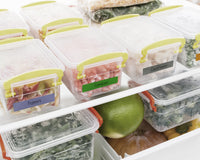
Food date labels have been confusing for a long time.
One package says “sell by.” Another says “best before.” Another says “use by.” Shoppers are often left wondering whether the date is about food quality, food safety, store inventory, or something else entirely.
California Assembly Bill 660, commonly called AB 660, is designed to make that wording clearer and more consistent.
Beginning July 1, 2026, many food manufacturers, processors, and retailers responsible for labeling food sold in California will need to use standardized terms when displaying quality or safety dates on food manufactured on or after that date.
The change may sound small, but it affects packaging decisions, printed labels, staff procedures, and the way customers understand the dates they see.
What Is California AB 660?
AB 660 is a California law that standardizes the phrases used to communicate quality and safety dates on many food products.
According to the California Department of Food and Agriculture’s food date labeling guidance, the law requires businesses that use quality or safety dates to choose from a smaller set of approved terms.
The goal is to make date labels easier for shoppers to understand and help reduce the amount of food discarded simply because the meaning of a date was unclear.
The law was signed in 2024, but its main date-labeling requirements begin on July 1, 2026.
Does the New Law Require Every Food to Have a Date?
No. This is an important detail.
AB 660 does not automatically require every food item to display a date. It applies when a food manufacturer, processor, or retailer chooses to use a quality or safety date, or when another law already requires one.
The standardized terms apply to covered food items manufactured on or after July 1, 2026.
Businesses can review the exact requirements in the official California AB 660 bill text.
What Date Wording Will Be Allowed?
The new system separates dates into two main categories: quality dates and safety dates.
Quality Dates
A quality date indicates when a food is expected to be at its best freshness or quality. Under AB 660, the approved wording is:
- BEST if Used by
- BEST if Used or Frozen by
These phrases do not automatically mean that the food becomes unsafe immediately after the printed date. They communicate the date connected to expected quality.
Safety Dates
A safety date communicates when a food item should no longer be eaten for safety reasons. The approved wording is:
- USE by
- USE by or Freeze by
The difference between BEST and USE matters. One communicates expected quality. The other communicates safety.
For packages too small to display the full wording, the law also permits certain abbreviations: “BB” for a quality date and “UB” for a safety date.
What Happens to “Sell By” Dates?
AB 660 prohibits consumer-facing date labels that use the phrase “sell by” on covered food manufactured on or after July 1, 2026.
“Sell by” has traditionally been used to help stores manage inventory. The problem is that shoppers may see it as a warning that the food is unsafe after that date, even though the date was intended mainly for store rotation.
The law still allows retailers to use coded stock-rotation dates that are not easily readable by consumers and do not display the words “sell by.”
Grocery stores may also use “packed on” for prepared foods, but those foods must also display an appropriate quality or safety date when required under the law.
Why Is California Changing Food Date Labels?
Too many date phrases can make it difficult for people to know what a package date actually means.
The CDFA explains that more than 50 different date-label phrases have been used in the United States. That lack of consistency may lead people to throw away food that is still usable simply because they misunderstand the date.
Federal agencies have also supported clearer quality-date language. The USDA Food Safety and Inspection Service’s food product dating information explains how calendar dates are used and how “Best if Used By” generally communicates peak quality rather than an automatic safety cutoff.
Standard wording gives shoppers a better chance of understanding whether a date relates to quality or safety.
Who Should Pay Attention to AB 660?
The law is especially important for businesses responsible for placing dates on consumer-facing food packaging sold in California.
That may include:
- Food manufacturers
- Food processors
- Grocery retailers
- Delis and bakery departments
- Meal prep companies
- Small packaged-food businesses
- Businesses selling refrigerated or frozen foods
- Companies that distribute food across state lines
A business does not need to be located in California for the law to deserve attention. A company that manufactures food elsewhere but sells covered products in California may need to consider the state’s labeling requirements.
Businesses should review how the law applies to their specific foods, packaging, responsibilities, and sales channels rather than assuming that every operation will be treated the same way.
Are Any Foods Excluded?
AB 660 contains exclusions and limits that businesses should review carefully.
The standardized date-labeling section does not apply to:
- Infant formula
- Eggs and pasteurized in-shell eggs
- Beer and other malt beverages
The law also addresses certain alcoholic products, shellfish requirements, federal preemption, grocery-store prepared foods, and other situations separately.
Because the details can vary, the official law and agency guidance should be used when making compliance decisions.
Why “BEST if Used or Frozen by” Can Be Helpful
The phrase “BEST if Used or Frozen by” gives customers a clear quality message while also placing freezing directly into the instruction.
That can be useful for foods that may be used fresh or moved into frozen storage before the quality date.
Examples may include:
- Prepared meals
- Bakery products
- Portioned ingredients
- Deli items
- Soups and sauces
- Packaged leftovers or take-home foods
- Refrigerated foods that may be frozen for later use
The phrase also gives staff a consistent format. Instead of choosing from several versions such as “best before,” “freeze before,” or “use or freeze,” the approved wording is already established.
Why Freezer-Safe Labels Matter
Correct wording is only helpful when the label remains readable where the food is stored.
Freezers can be demanding environments. Containers are stacked and moved. Bags bend and flex. Packages may be handled with gloves, and ordinary labels may not be designed for low temperatures.
A practical freezer label should:
- Have a clear area for writing the date
- Remain readable during cold storage
- Use adhesive intended for freezer conditions
- Fit common containers, bags, and packages
- Be easy for staff to peel, write on, and apply
The system should be simple enough to use during a normal workday. If labeling becomes slow or confusing, consistency usually suffers first.
A Practical AB 660 Review Checklist
Businesses preparing for the new requirements can begin by reviewing a few basic areas.
- List your current date phrases. Look for terms such as “sell by,” “best before,” “expires,” or other wording that may need to change.
- Decide whether each date communicates quality or safety. The correct AB 660 phrase depends on the purpose of the date.
- Identify products sold in California. Include products manufactured elsewhere but distributed into the state.
- Review manufacturing dates. The primary requirements apply to covered foods manufactured on or after July 1, 2026.
- Check exceptions and product-specific rules. Do not assume every food follows the same requirements.
- Review packaging and label inventory. Older preprinted packaging may need to be replaced or updated.
- Train employees on the new wording. Staff should understand the difference between a quality date and a safety date.
- Confirm that labels match the storage environment. Refrigerated and frozen products need labels suited to those conditions.
Starting early gives businesses time to review packaging, order updated labels, train staff, and correct problems before the transition becomes urgent.
Can a Preprinted Label Make a Business Compliant?
Not by itself.
A preprinted label with approved wording can support a clearer, more consistent date-labeling process. However, the wording on one sticker does not determine whether a product, package, or business fully complies with AB 660.
Compliance may depend on:
- The type of food
- Whether the date communicates quality or safety
- Who is responsible for labeling the product
- When the food was manufactured
- How and where the food is sold
- Other state or federal requirements
Businesses should read the official guidance and seek qualified legal or regulatory advice when necessary.
Clearer Dates Can Make Food Labels More Useful
AB 660 is not just a wording change. It is an effort to make food dates easier for people to understand.
A customer should be able to look at a date and know whether it describes expected quality or food safety. A staff member should be able to apply the correct wording without choosing from a dozen similar phrases.
Clear language will not run the kitchen, rotate the stock, or clean the walk-in. It would be a very impressive sticker if it did.
But it can answer an important question:
Is this date about quality or safety?
ChromaLabel’s 1" x 2" BEST if Used or Frozen by labels feature a matte writable surface and freezer-safe adhesive. Each roll contains 500 labels designed to provide a clear place for adding a date on appropriate containers, bags, and packages used in cold storage.
These labels can support a consistent date-marking process, but businesses remain responsible for confirming which wording and labeling requirements apply to their products.