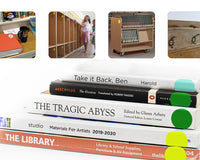
Every year, millions of books are donated to libraries, churches, schools, thrift stores, and Little Free Libraries. Many arrive with loose pages, cracked spines, and worn corners—damage that will only get worse once the book enters circulation.
The good news? Most donated books can be repaired in minutes with the right supplies. A small investment in book repair materials can save hundreds of dollars in replacement costs and keep beloved titles available for readers.
This guide covers everything you need to know about repairing donated books, whether you're a volunteer at a church library, a Little Free Library steward, or running a community book drive.
Why Repair Donated Books?
Before dismissing a damaged book to the recycling bin, consider what a few minutes of repair can accomplish:
- Extend book life by 5-10 years with proper spine reinforcement
- Save money — repairing a book costs under $1; replacing it costs $15-30
- Preserve titles that may be out of print or hard to find
- Reduce waste by keeping usable books out of landfills
- Improve presentation so readers actually want to pick up the book
A worn book that sits untouched on the shelf helps no one. A repaired book gets read.
Assessing Donated Books: What Can Be Saved?
Not every donated book is worth repairing. Here's how to quickly assess what's fixable:
Worth Repairing
- Loose or detached pages
- Cracked or separated spine
- Worn or torn corners
- Minor cover damage
- Faded spine text (cosmetic, but functional)
Not Worth Repairing
- Mold or mildew damage (can spread to other books)
- Water damage with warped pages
- Strong odors (smoke, mildew)
- Missing pages
- Severe insect damage
Pro tip: Always inspect donated books in a separate area before adding them to your collection. Mold spreads quickly and can damage an entire shelf.
Essential Supplies for Donated Book Repair
You don't need a full bookbinding workshop. These basics will handle 90% of repairs:
1. Book Repair Tape
The foundation of any repair kit. Choose based on your books:
- Cloth book repair tape — Best for hardcovers, hymnals, and books with fabric covers. Durable, flexible, and available in multiple colors to match existing bindings.
- Clear book repair tape — Ideal for paperbacks, dust jackets, and glossy covers where you want the repair to be invisible.
2. Book Repair Corners
Pre-cut cloth corners that reinforce worn edges. Much faster than cutting tape to size, and they create a professional-looking repair.
3. Acid-Free Adhesive
For reattaching loose pages. Regular glue can yellow and damage paper over time—always use acid-free, pH-neutral adhesive for book repair.
4. Bone Folder
A simple tool for smoothing tape and creating clean creases. A clean credit card works in a pinch.
5. Book Repair Wings
Reinforcement pieces for the inside hinge where pages connect to the cover—a common failure point in hardcovers.
Step-by-Step: Common Donated Book Repairs
Repair #1: Cracked or Loose Spine
The most common issue with donated hardcovers.
What you'll need: Cloth book repair tape in a color that matches (or complements) the book
Steps:
- Close the book and lay it flat, spine facing up
- Cut a piece of tape about 1 inch longer than the spine
- Center the tape over the spine, leaving equal overlap on both ends
- Press firmly from the center outward to remove air bubbles
- Wrap the excess tape around the top and bottom edges
- Use a bone folder to smooth and secure
Width guide:
- Small books (5" spine or less): Use 2" tape
- Standard books: Use 3" tape
- Large books: Use 4" tape
Leave about ½ inch of tape on each side of the spine for proper coverage.
Repair #2: Loose or Detached Pages
Pages that have separated from the binding.
What you'll need: Acid-free adhesive, bone folder
Steps:
- Open the book to where the loose pages belong
- Apply a thin line of adhesive along the binding edge of the loose pages
- Carefully press pages into position
- Close the book and place under a weight for 30 minutes
- For extra security, apply book repair wings along the inside hinge
Important: Less glue is more. A thin, even line creates a stronger bond than a thick glob.
Repair #3: Worn or Torn Corners
Corners take the most abuse and are often the first thing to fail.
What you'll need: Book repair corners or cloth tape cut into triangles
Steps:
- If the corner is torn but still attached, apply a small amount of adhesive to reattach
- Position the repair corner over the damaged area
- Press firmly and smooth with a bone folder
- For badly damaged corners, wrap the repair corner around both sides
Pre-cut book repair corners save significant time when processing multiple donated books.
Repair #4: Torn Dust Jacket
Many donated books come with torn or taped dust jackets.
What you'll need: Clear book repair tape
Steps:
- Remove any old tape (it's probably yellowed and failing)
- Align the torn edges as closely as possible
- Apply clear tape to the inside of the jacket (less visible)
- For edge tears, fold tape over the edge for reinforcement
- Smooth carefully to avoid bubbles
Repair #5: Paperback Cover Separation
When the cover starts pulling away from the pages.
What you'll need: Clear stretchable book repair tape
Steps:
- Apply tape along the inside of the spine, covering the gap between cover and pages
- The stretchable tape will flex when the book opens
- Repeat on the back cover if needed
- For extra durability, apply tape to the outside spine as well
Setting Up a Donated Book Repair Station
If you regularly receive donated books, a dedicated repair station saves time:
Basic Station:
- Cloth tape in 3-4 common colors (black, brown, navy, burgundy)
- Clear tape for paperbacks
- Acid-free adhesive
- Book repair corners
- Bone folder
- Scissors
- Clean workspace with good lighting
Processing Workflow:
- Sort — Separate books into "ready to shelve," "needs repair," and "cannot be saved"
- Assess — Identify what repair each book needs
- Batch — Group similar repairs together (all spine repairs, then all corners)
- Repair — Work through each batch
- Quality check — Ensure repairs are secure before shelving
Batching similar repairs is much faster than switching between repair types.
Special Considerations by Book Type
Church Hymnals
Often donated in large quantities with matching bindings. Use cloth tape in burgundy or navy to match traditional hymnal colors. The repair blends in, maintaining the unified look on your pew racks. See our complete hymnal repair guide.
Children's Books
Take extra abuse and benefit from preventive reinforcement. Consider adding corner protectors and spine tape to new donations before they enter circulation.
Vintage or Collectible Books
If a donated book has potential value, consult a professional before attempting repairs. Improper repair can reduce collectible value.
Little Free Library Books
These face weather exposure and heavy handling. Use water-resistant tape and consider laminating paperback covers for outdoor libraries.
The Bottom Line
Most donated books can be saved with simple repairs that take just minutes. The supplies pay for themselves quickly—a single roll of book repair tape can repair dozens of books, saving hundreds of dollars in replacement costs.
Whether you're running a church library, maintaining a Little Free Library, or processing donations for a book sale, basic repair skills keep more books in circulation and out of the landfill.
What You Need to Get Started
- BookGuard Premium Cloth Tape — For hardcovers and spines
- BookGuard Clear Tape — For paperbacks and dust jackets
- Book Repair Corners — For worn edges
- Book Repair Wings — For hinge reinforcement
Have questions about repairing a specific type of donated book? Contact us—we're happy to help.