There is a funny thing about wrapped food. The minute a sandwich disappears inside paper, foil, or a takeout box, it becomes surprisingly good at keeping secrets.
Was this one cheese? Veggie? Sausage, egg and cheese?
Someone probably knew a minute ago. During a busy lunch rush, however, a minute can be a very long time.
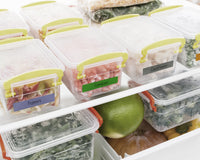
That is where small food stickers can make life a little easier. They give employees and customers a quick way to identify what is inside a wrapper, bag, box, or other food package without opening it or relying on someone’s memory.
Food Stickers Are Not Just for Delis

We often call them deli labels, but that name does not tell the whole story. These little stickers can be useful anywhere food is prepared, wrapped, displayed, handed off, or packed for later.
That includes:
- Delis and sandwich shops
- Restaurants and cafés
- Food trucks
- Concession stands
- Caterers
- Convenience stores
- Grocery prepared-food counters
- School and workplace cafeterias
If several menu items use similar packaging, a clear sticker can help prevent a customer from taking home the wrong lunch. Nobody wants to unwrap three sandwiches in the break room while trying to locate the veggie order.
Make the Sticker Part of Your Packing Routine
The easiest system is usually the one employees can follow without stopping to think about it.
Choose one location for the sticker and use it every time. It might go in the upper-right corner of a sandwich wrapper, near the closure of a paper bag, or on the top of a takeout box. Consistent placement helps employees and customers know exactly where to look.
A simple routine might be:
- Confirm the food item.
- Wrap or package it.
- Apply the correct sticker in the usual location.
- Add the customer’s name, order number, or date when needed.
It is not a complicated system, which is rather the point. Busy kitchens already have enough complicated systems.
Separate Foods That Look Alike from the Outside

Food identification stickers are especially helpful when different items share the same packaging. A wrapped grilled cheese may look nearly identical to a wrapped turkey sandwich. Breakfast sandwiches can be even trickier once they are stacked together for pickup.
A bold Cheese sticker makes a meatless sandwich easier to spot. A Sausage, Egg & Cheese sticker can identify a popular breakfast order, while a Veggie sticker helps separate a vegetable option from the rest of the group.
This can be helpful on pickup shelves, in catering boxes, inside grab-and-go coolers, or at the food-truck window when several orders are ready at once.
A Helpful Sticker, but Not the Whole Labeling System
A food sticker identifies the menu item, but it does not tell the customer everything about that food.
For example, a Veggie sticker does not automatically mean the food is vegan, gluten-free, or free from allergens. A Cheese sticker identifies the item, but it does not replace ingredient information or an allergen disclosure when one is required.
The FDA identifies nine major food allergens and explains how allergen-labeling requirements can differ depending on how and where food is packaged and sold. Businesses can review the FDA’s current food allergen information and check applicable state and local requirements.
Food identification stickers should support your regular ordering, ingredient, allergen, date-marking, and food-safety procedures. They are the quick visual clue, not the entire story.
Remember What the Sticker Cannot See
The sticker may say Chicken, but it has no idea how long that chicken has been sitting on the counter. It is helpful, but not quite that talented.
Continue following proper temperature, storage, and handling practices. The USDA’s safe handling advice for takeout foods includes practical information for keeping hot and cold foods at appropriate temperatures and handling leftovers safely.
A Small Fix for a Very Common Problem
ChromaLabel food stickers measure 3/4 inch round and feature bold black printing on fluorescent yellow material. Each roll contains 500 labels with strong adhesive for clean, dry wrappers, bags, boxes, and other suitable food-packaging surfaces.
A tiny sticker will not organize the entire lunch rush. If it could answer the phone and refill the napkin dispenser too, we would really have something.
What it can do is answer one common question before it slows everyone down: “What’s in this wrapper?”